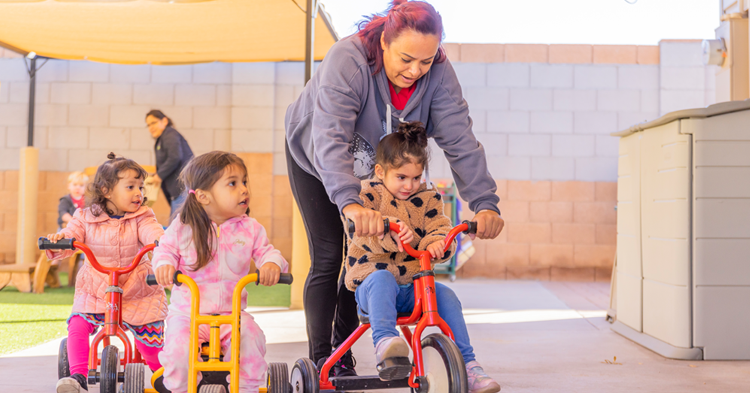
As an early childhood educator, you probably already know how good physical play is for young bodies and growing brains. (If you want to learn more, check out these links about the brain boosting impacts and social and emotional benefits of active play.)
Tanto si trabaja con bebés como con niños pequeños o preescolares, tiene muchas cosas entre manos. Con todas las demás cosas que compiten por su atención, ¿se ha olvidado del juego activo?
If you’re looking for fresh ideas or just want to refresh your routine, here are four simple ways to enhance active play.
1. Get outside every day (weather permitting)
Arizona’s weather varies from mountain to desert and from season to season. But kids still need outdoor active play, even when the weather isn’t perfect. As the old Scandinavian saying goes, “There is no such thing as bad weather, only bad clothes.”
When children are dressed for the weather, they can play outside year-round. A few tips:
- Build an extra stash: Ask families if they can donate outgrown winter coats, gloves or rain boots. You can also check local thrift stores for gently used items to keep on hand.
- Track weather warnings: Stay safe by signing up for alerts from the National Weather Service. Unless there is active rain or snowfall, or a weather warning or health warning for your area, make sure children get outdoors daily.
- Beat the summer heat: On hot summer days, avoid the hottest part of the day by moving outdoor play to early morning or late afternoon, and keep the little ones sun-safe with shade, hats, protective clothing and sunscreen.
2. During very bad weather, move the fun indoors
When extreme weather keeps you inside, don’t let it stop the fun! There are plenty of ways to keep kids active indoors:
- Bring out portable play equipment: You don’t need expensive gear to get kids moving. Try tailored items for each age group:
- Infants: Use soft mats and tunnels to encourage rolling, scooting and crawling.
- Toddlers: Bring out soft balls, beanbags and laundry baskets for tossing and catching games.
- Preschoolers: Introduce jump ropes, hula hoops and simple ring-toss games.
- Mix it up with different movement activities. Here are some easy active play ideas you can do indoors.
- Use a larger space: Standard classrooms don’t always have enough room for big movements like running or jumping. If possible, move to a large indoor space for active play.
Licensing tip:
Make sure all play areas are licensed. If you’re not sure, check with your Arizona Department of Health Services (ADHS) Compliance Officer.
3. Plan active play throughout the day
Children are most active during the first 10-15 minutes of outdoor play. Research shows multiple outdoor play times throughout the day help children get the most exercise.
Juego activo: ¿cuánto es suficiente?
Using the guidelines below, consider breaking up the time into multiple, shorter blocks for the most benefit.
Lactantes: tiempo boca abajo con supervisión y cuando sea seguro y apropiado, 4 veces al día o más.
Niños pequeños: 90 minutos al día o más
Preescolares: 120 minutos al día o más
(Source: Empower Standards, Arizona Department of Health Services)
4. Get in on the fun
Los niños se mueven más, aprenden más y sacan más partido del juego activo cuando usted participa. Prueba lo siguiente:
- Lead heart-pumping activities like friendly competitions, races and games. Watch this video to see how one program used relay games to support skill building.
Outdoor Physical Activity – Relay Day
- Busca oportunidades para ayudar a los niños a aprender nuevas habilidades. Desde cogerles de la mano para ayudarles a mantener el equilibrio hasta enseñarles a pedalear en triciclo, sus consejos les ayudarán a adquirir nuevas destrezas... ¡y a confiar en sí mismos!
¿Necesita ayuda para empezar?
If your program participates in Quality First’s Quality Improvement participation type, contact your child care health consultant. Their expert assistance, advice, training and recommendations can help you put new ideas into practice.
Resources from around the web
The Empower Program: Offered through ADHS, Empower supports the development of healthy habits in child care settings. Visit their website to find standards, professional development and resources on physical activity and other health topics.